January 15, 2025
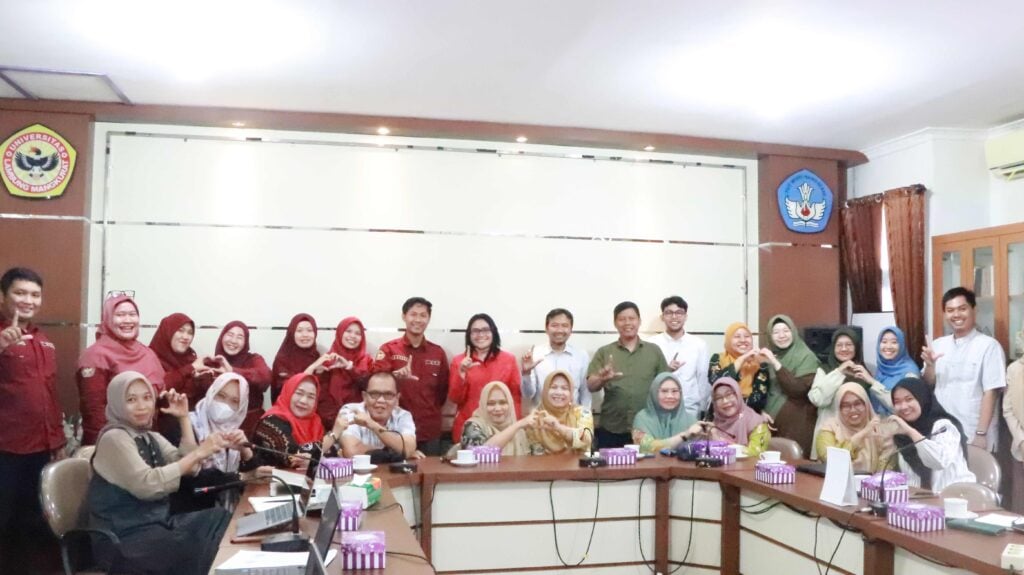
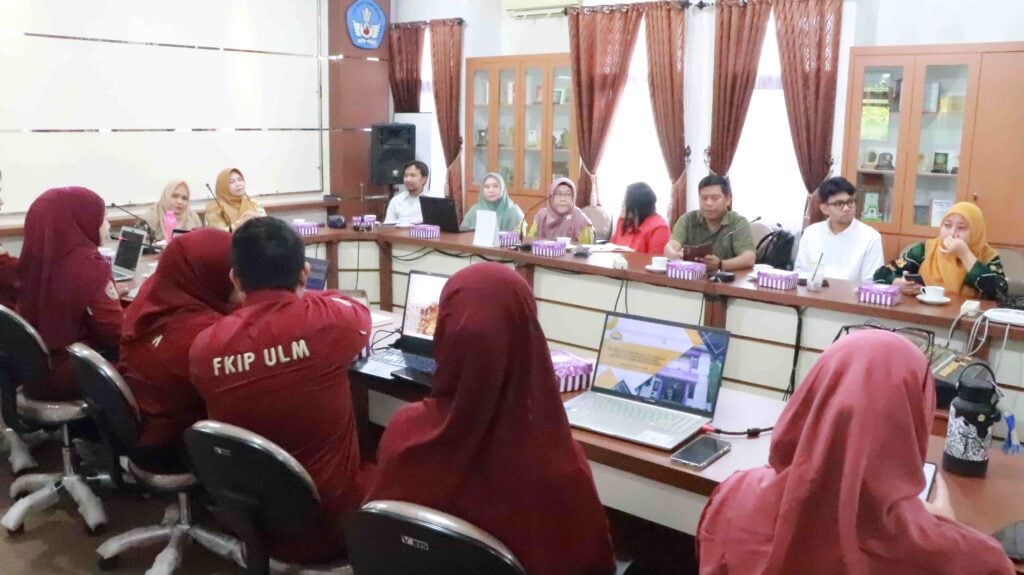
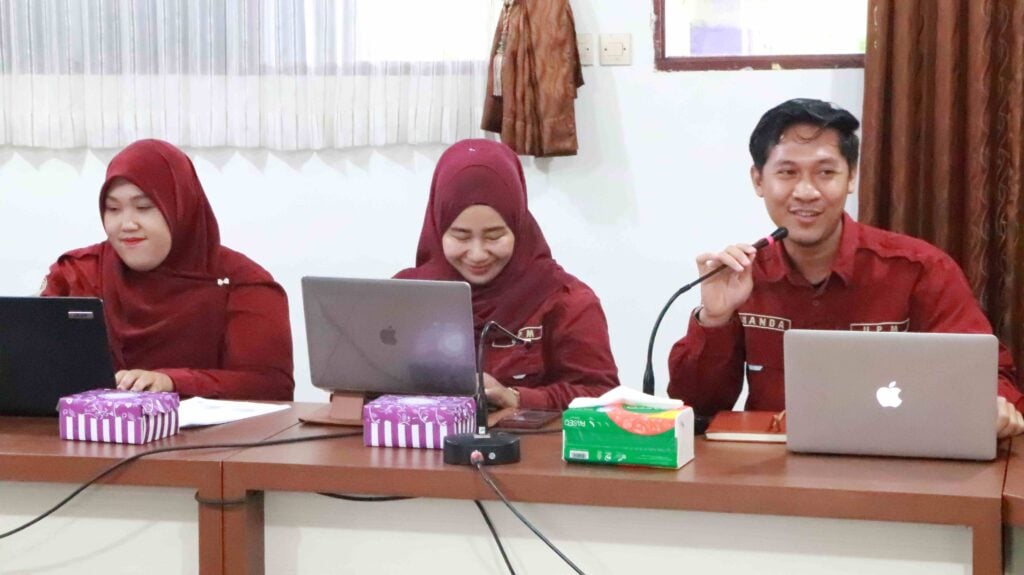
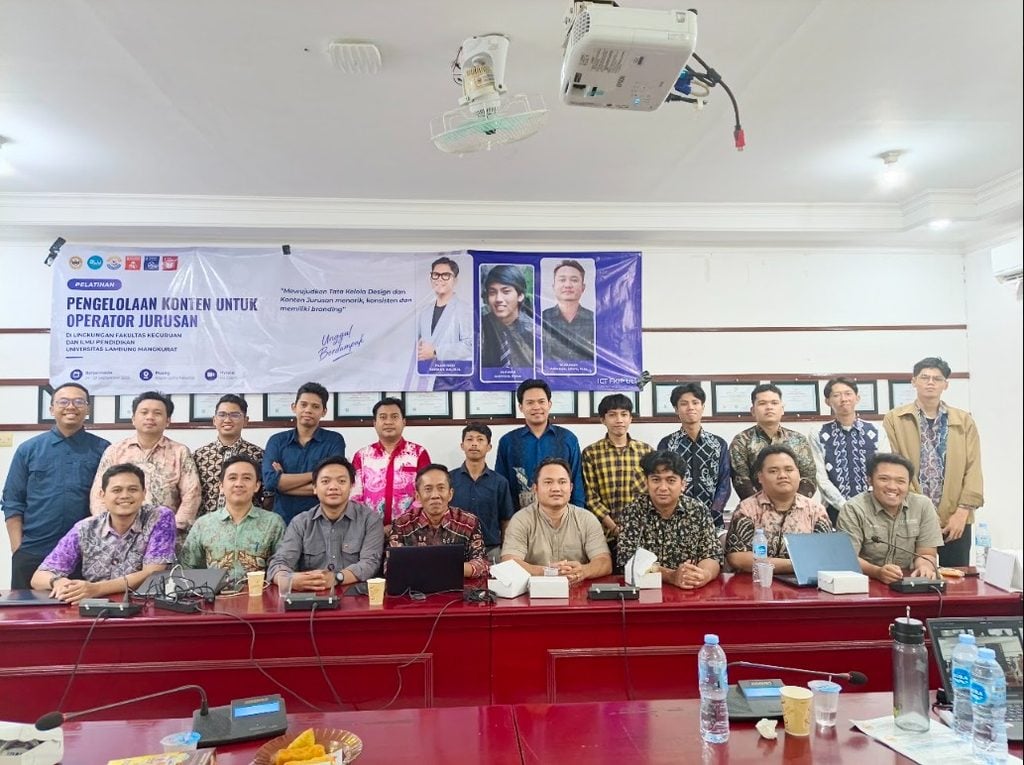
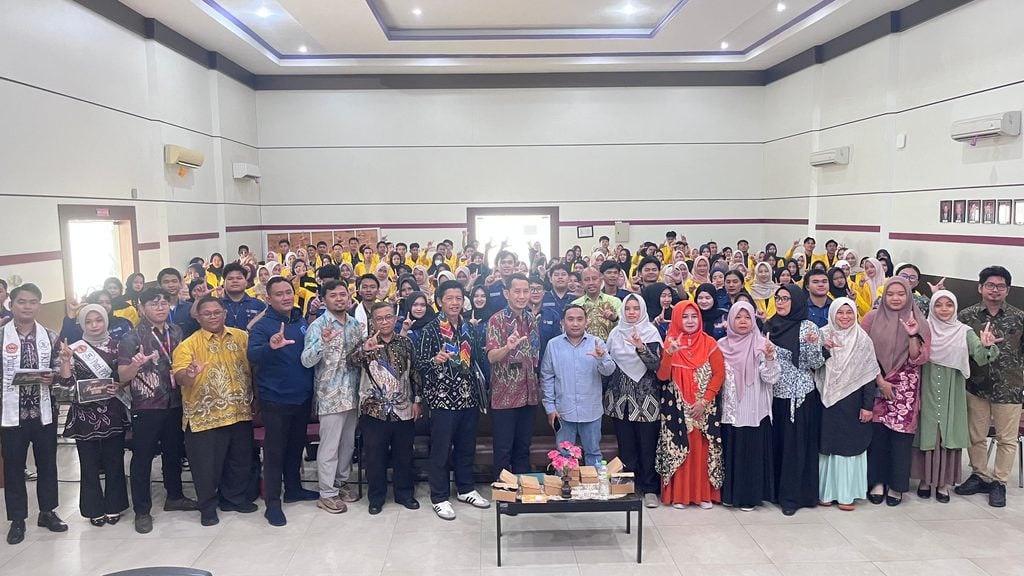
Banjarmasin – The Faculty of Teacher Training and Education (FKIP) of Lambung Mangkurat University (ULM) on Tuesday, January 14, received a visit from the Faculty of Economics and Business (FEB) ULM. The delegation from the neighboring faculty was led by the Vice Dean for Academic Affairs, Muzdalifah, with 13 members consisting of members of the Quality Assurance Unit (UPM) and the Cooperation and Public Relations Management Unit (UPKH). They were warmly welcomed by FKIP leadership representatives, namely Deputy Dean of Academic Affairs, Deasy Arisanty; Deputy Dean of Student Affairs and Alumni, Ali Rachman; and accompanied by the Head of UPM, Ananda Setiawan and his team: Nurul Hidayati Utami, Sauqina, Tika Puspita Widya Rini, Meliyana Aini, Muhammad Muhaimin, and Imelda Indah Savitri; Acting Head of the General Affairs Division, Isnawati; Head of the Finance and Personnel Subdivision, Ida Auliani; and Secretary of the UPKH Public Relations Division, Dewi Alfianti.
In her opening remarks, Deasy Arisanty warmly welcomed the arrival of the UPM FEB ULM team. She greatly appreciated the arrival of the FEB team in order to learn together about quality assurance in preparation for the accreditation of Study Programs (PS) within the FEB. In her presentation, Deasy said that the FKIP leadership had chosen young people to manage the UPM so that this unit could work more optimally. This young team worked hard to implement the quality cycle, including preparing for the accreditation of a number of PS. She explained that every year, the UPM team plans which documents need to be updated or created to complete the FKIP quality documents. The hope is that a good quality culture will be created in the future. “Currently, we have prepared ourselves for the accreditation of the English Education PS, which is the last PS at FKIP to undergo Lamdik (Independent Education Accreditation Agency) accreditation. Meanwhile, we are also preparing for international accreditation, with the SER document preparation reaching 80%,” she said.
Meanwhile, Muzdalifah, as the group leader, expressed her gratitude for the warm welcome from FKIP. She said that choosing FKIP as the benchmark was based on the desire to learn from a nearby source that shares the same common sense and local wisdom. “Proximity was also an important factor in this decision. We are also aware of FKIP’s reputation for quality in terms of excellent accreditation, so we need to learn because next year several study programs at FEB will be re-accredited,” she explained.
After the opening session, the event continued with a presentation on the profile of UPM FKIP and a session to share information related to faculty quality management. The presentation from UPM FKIP was delivered by Ananda Setiawan, who explained a number of important points related to the UPM work concept. According to him, becoming a quality assurance officer requires a sense of belonging, commitment, and loyalty to the institution so that all mandates entrusted to UPM FKIP can be carried out optimally, including how UPM FKIP implements the PPEPP cycle (Determination, Implementation, Evaluation, Control, and Improvement). Ananda also conveyed the preparations for international accreditation that FKIP has carried out so far.
According to Ananda, FKIP ULM has work units that contribute to the implementation of all main tasks and functions, including UPM, which must have a strong commitment to maintaining the quality of the institution. This is proven by the fact that 20 S-1 study programs have successfully obtained excellent accreditation, and 1 study program has been accredited A and is in the process of obtaining excellent accreditation. “The visit from FEB ULM has motivated us to contribute more to FKIP and ULM in general. This is because UPM FKIP is one of the units that often receives visits from various work units within and outside ULM. Currently, we are also initiating E-SPMI (e-Internal Quality Assurance System), which aims to integrate the quality cycle at FKIP ULM. This will greatly assist the quality cycle implementation process and will certainly facilitate the quality assurance verification process during upcoming national and international accreditations,” he explained. (Admin)