November 19, 2025

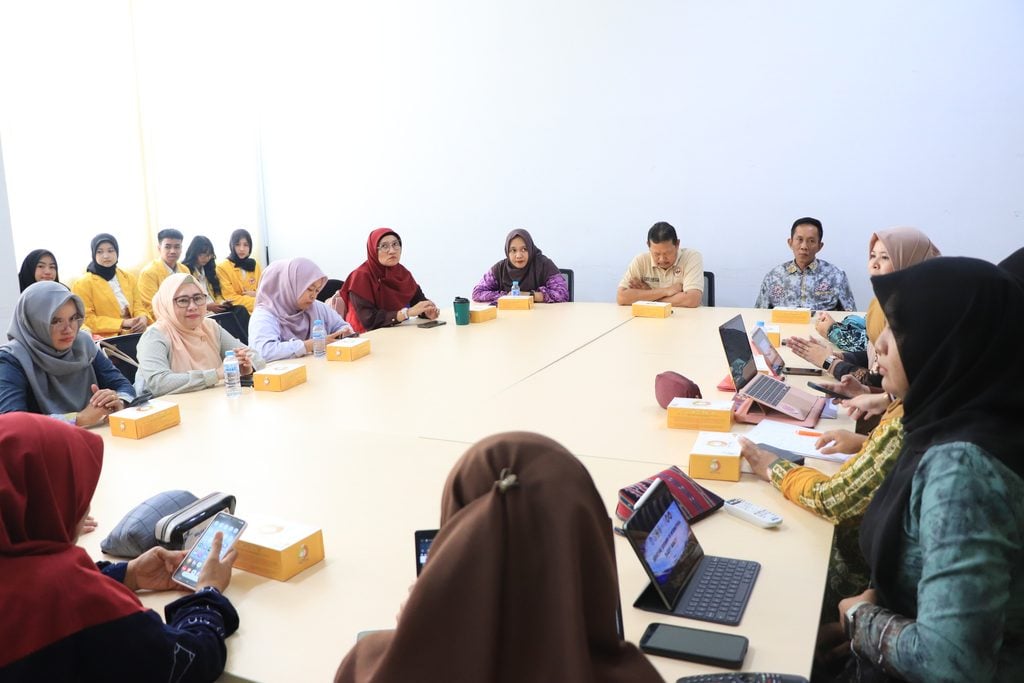
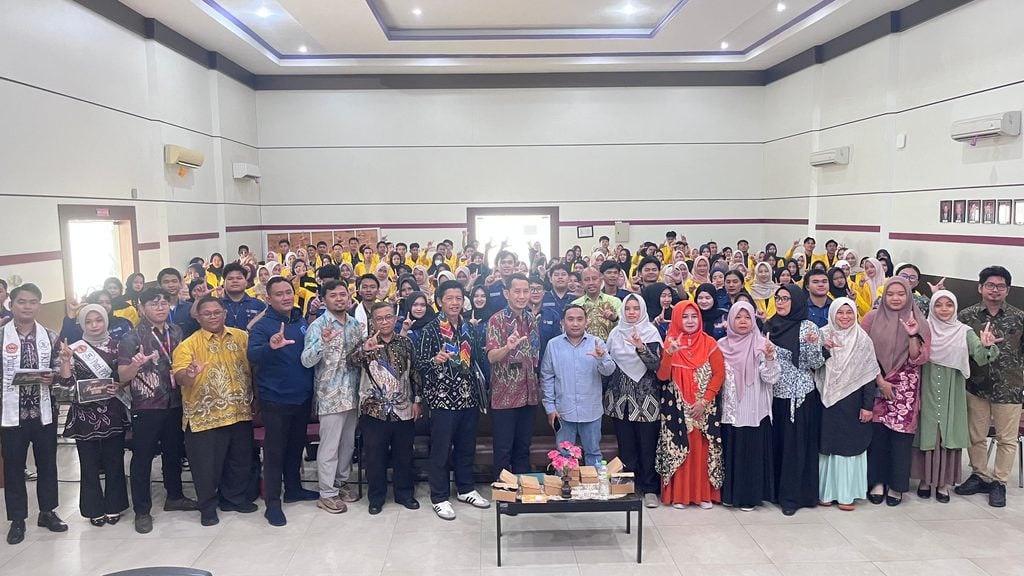
Banjarmasin – The Department of Pancasila and Civic Education (JPPKn) of the Faculty of Teacher Training and Education (FKIP) at Lambung Mangkurat University (ULM) once again held an academic activity in the form of a guest lecture as an effort to enrich the scientific knowledge of students and lecturers. This activity took place on Wednesday, November 19, at the PPKn Laboratory and lasted from 8:00 a.m. to 10:30 a.m. WITA.
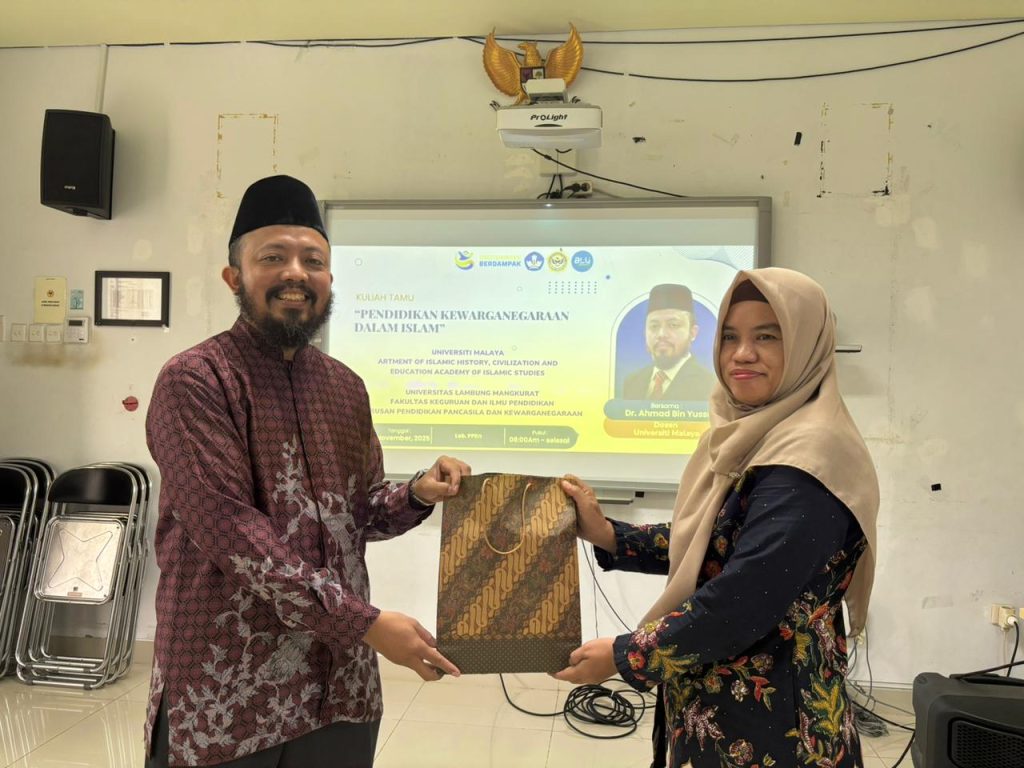
On this occasion, the Department of Civic Education, Faculty of Teacher Training and Education, ULM presented a guest speaker from the University of Malaya, Malaysia, namely Ahmad Bin Yussuf, an academic and researcher who has expertise in the study of Civic Education, Islamic Education, and Civic Education Studies. The theme of the lecture is “Civic Education in Islam,” an issue that is increasingly relevant in contemporary global dynamics that demand the integration of Islamic values with modern concepts of citizenship.
In his presentation, Ahmad Bin Yussuf emphasized that the concept of citizenship in the Islamic perspective is not only oriented towards the relationship between individuals and the state, but also includes moral, spiritual, and social responsibility dimensions. He explained that values such as justice (al-‘adl), deliberation (syuro), brotherhood (ukhuwah), and respect for human dignity are the ethical foundations that shape the character of citizens in the Islamic tradition. Furthermore, according to him, the integration of these principles can contribute significantly to the development of a more humanistic, inclusive, and value-oriented model of citizenship education.
This activity received an enthusiastic response from Civic Education students, who actively discussed the relevance of Islamic values-based civic education in Indonesia as a country with a Muslim majority population that still upholds pluralism and diversity. Participants also highlighted the importance of developing a Civic Education curriculum that is able to accommodate Islamic perspectives without neglecting national and constitutional principles.
The Head of JPPKn FKIP ULM, Mariatul Kiptiah, said in her speech that this guest lecture was part of the department’s commitment to strengthening international academic networks and improving the quality of learning through the presence of experts from various countries. “I hope that this academic cooperation can continue in joint research, lecturer and student exchanges, and the development of more comprehensive teaching materials,” she said.
The guest lecture with Ahmad Bin Yussuf not only enriched the participants’ knowledge, but also opened up a space for scientific dialogue on how civic education can be developed in a contextual manner that is relevant to Islamic values. The event closed with a group photo session and the presentation of souvenirs as a token of appreciation to the speakers.
(Article Contributor: Alex)
(Administrator)