June 15, 2026
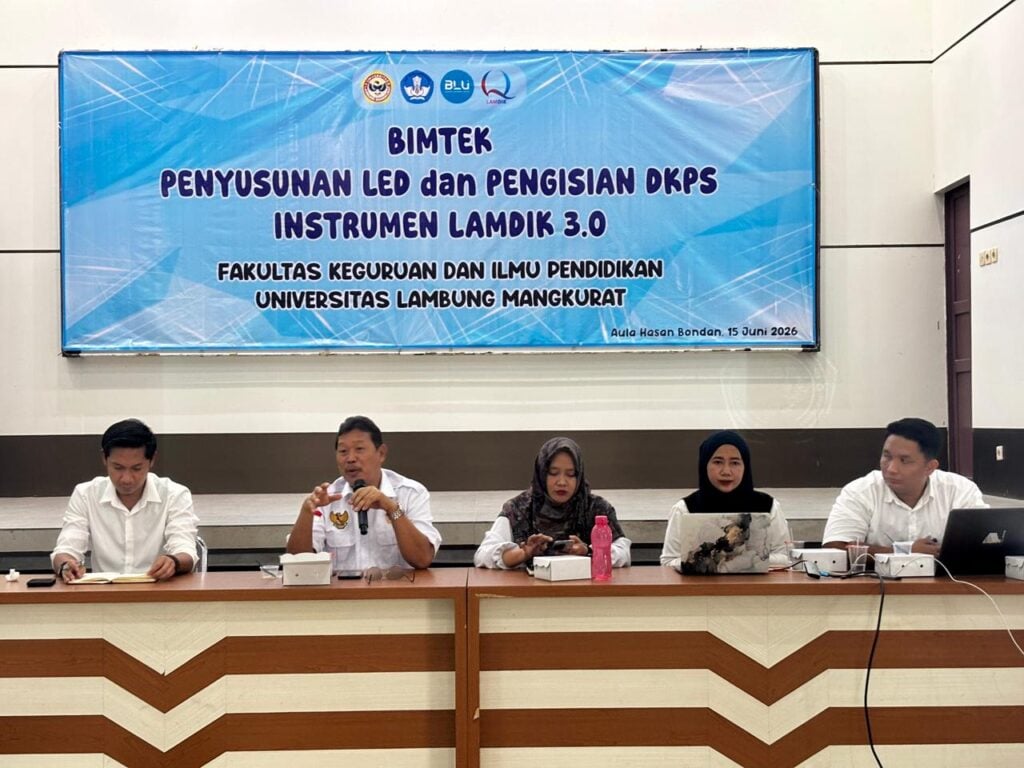
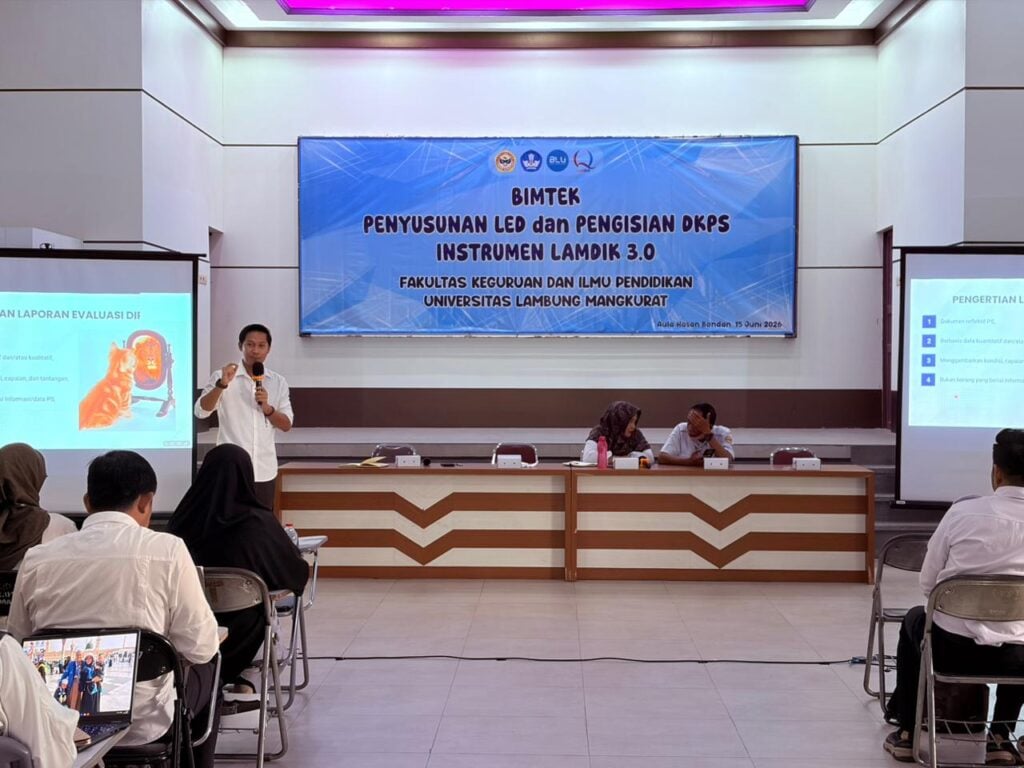
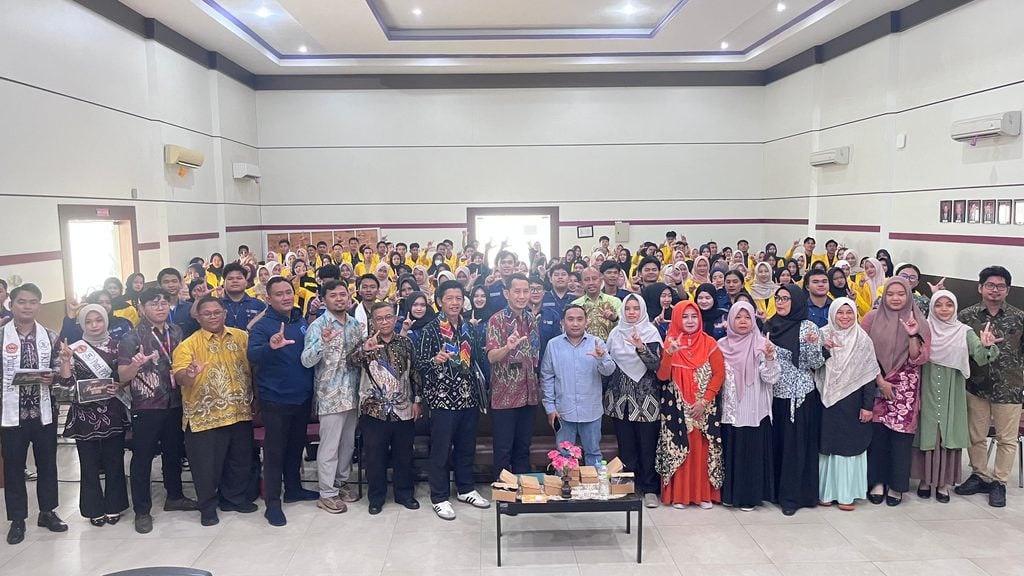
Banjarmasin – The Quality Assurance Unit (UPM) of the Faculty of Teacher Training and Education (FKIP) at Lambung Mangkurat University (ULM) held a technical guidance workshop (Bimtek) on the Preparation of Self-Evaluation Reports (LED) and Study Program Performance Documents (DKPS) based on the LAMDIK 3.0 Study Program Accreditation Instrument (IAPS). The event, held in the Hasan Bondan Auditorium at FKIP ULM, was opened by the Dean of FKIP ULM, Sunarno Basuki, and attended by task force teams from 10 departments/ study programs within FKIP ULM that will soon undergo the reaccreditation process from October 2026 through early 2027.
In his opening remarks, Sunarno Basuki expressed his hope that this event would be of the greatest benefit to the accreditation preparations for the departments and study programs. Meanwhile, Deasy Arisanty also noted that accreditation is a crucial part of efforts to sustainably maintain and improve the quality of higher education. Therefore, all departments must thoroughly prepare their accreditation documents by presenting accurate data, conducting comprehensive analyses, and performing objective self-evaluations. “Accreditation is not just about fulfilling documentation requirements, but about how departments can tangibly demonstrate the quality of their educational programs, research, and community service. That is why early preparation is so important,” she said.
This technical training session featured speakers from the ULM UPMFKIP team: Ananda Setiawan, Tika Puspita Widya Rimi, and Muhammad Muhaimin. The three provided technical guidance on preparing the LED, completing the DKPS, strategies for mapping supporting data, and aligning performance evidence with the assessment indicators in the LAMDIK 3.0 Accreditation Instrument.
In his presentation, Ananda Setiawan, chair of the UPM FKIP ULM, explained that one of the challenges in implementing the LAMDIK 3.0 Accreditation Instrument is the lack of a standardized format or template for the Self-Evaluation Report (LED). This situation has the potential to lead to differences in structure and variations in the presentation of documents across study programs. As part of its support efforts in this regard, UPM FKIP ULM has developed an FKIP ULM SER template that can be used collectively by all departments and study programs. This template is designed to help departments and study programs develop a systematic self-evaluation narrative, facilitate data mapping according to accreditation criteria, and standardize the document’s presentation format so that it more effectively illustrates the study program’s performance.
“This template was developed to help departments understand the content that needs to be included for each criterion. With a standardized guide, we hope that the preparation of the LED will be more effective, focused, and able to present achievements more comprehensively,” explained Ananda.
Meanwhile, Tika Puspita Widya Rini presented a strategy for developing a data-driven LED narrative based on performance achievements, while Muhammad Muhaimin provided guidance on completing the DKPS, validating supporting data, and the relationship between quantitative data and the self-evaluation narrative.
In his presentation, Muhammad Muhaimin also emphasized the importance of building a strong culture of quality within departments and academic programs. He shared a simple analogy about a headscarf to illustrate the importance of addressing every quality issue. According to him, a headscarf that is askew simply needs to be adjusted, but one with a hole must be replaced. This analogy illustrates that every quality finding must be addressed with the appropriate solution, whether through minor corrections or more fundamental improvements. This message aligns with the implementation of the PPEPP cycle within the Internal Quality Assurance System (SPMI), which emphasizes the importance of continuous evaluation, control, and quality improvement.
Participants were also given the opportunity to discuss and seek advice on various challenges they faced in the process of preparing accreditation documents. A range of questions—from data presentation and drafting self-evaluation narratives to mapping performance evidence and strategies for meeting assessment indicators—were discussed interactively with the speakers.
This activity serves as the first step in preparing the accreditation application for study programs whose accreditation will expire in 2027. By preparing early, study programs have a greater opportunity to conduct evaluations, gather supporting data, and strengthen various aspects that serve as indicators for accreditation assessment. The LED template developed by UPM FKIP ULM is expected to help departments and academic programs present a comprehensive self-evaluation while standardizing the document preparation process within FKIP ULM. Ultimately, this initiative aligns with FKIP ULM’s commitment to fostering a culture of quality. By strengthening the capacity of the task force and standardizing the preparation of accreditation documents, FKIP ULM is confident it can sustain and continuously improve the outstanding accreditation status of its academic programs.
(Article Contributor: Saiyidah Mahtari)
(Admin)